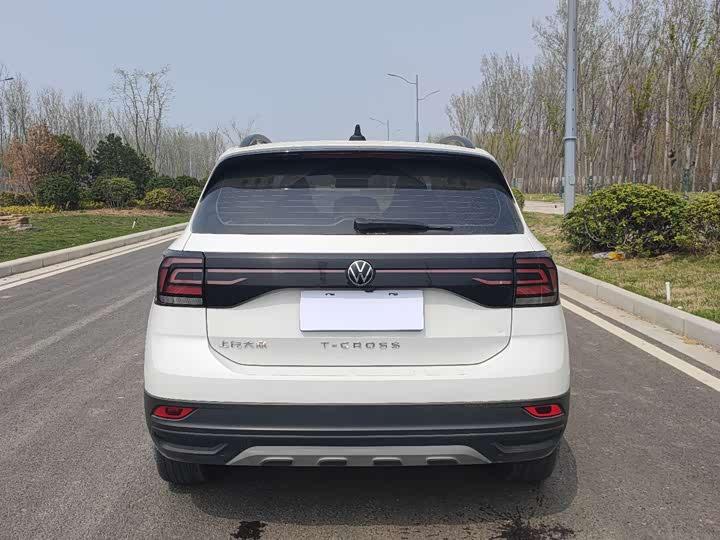
Volkswagen T-Cross: Volkswagen T-Cross specifications vary by model year, market, engine and trim, so useful comparisons must identify the exact version before interpreting dimensions, economy or equipment. This guide treats fuel tank capacity, range and economy as a buyer decision supported by evidence rather than a set of general claims.
Start with requirements rather than the listing price: model year, version, operating conditions and an acceptable preparation budget for the Volkswagen T-Cross. A request through pandausedcars.com should identify one VIN and explicitly include fuel tank capacity, range and economy.
Quick answer
Understand T-Cross fuel tank size, usable range, official versus real fuel economy and the factors that change consumption.
- Many European T-Cross versions use a nominal 40-litre fuel tank, but the market-specific data sheet remains the controlling source.
- Real range equals measured consumption and usable refill quantity, not tank size divided by a brochure economy figure.
- Roof loads, winter tires, short trips, traffic and sustained motorway speed can create larger differences than the engine comparison suggests.
How to scope fuel tank capacity, range and economy
Separate fuel tank capacity, range and economy into factory specification, present condition and suitability for the destination. These are different conclusions requiring different evidence.
Compare at least two candidates using the same inspection form. For model context, review Volkswagen T-Cross: 1 0 tsi vs 1 5 tsi t cross engine african. A repeatable sequence exposes real differences and prevents attractive photographs from replacing technical evidence.

Step-by-step vehicle checks
1. Verify the specification for the exact market version
Treat “verify the specification for the exact market version” as a separate condition of the Volkswagen T-Cross deal. For fuel tank capacity, range and economy, collect the vehicle VIN, factory data, registration chronology, service records and export documents, then compare the result with factory specification and intended use. If the seller cannot reproduce the check, mark the conclusion as unknown rather than passed. Agree who closes the finding and what document proves closure before shipment. The record protects the buyer from verbal reinterpretation after payment.
2. Record distance, refill quantity and route conditions
Start “record distance, refill quantity and route conditions” by defining the expected result for this Volkswagen T-Cross. For fuel tank capacity, range and economy, the seller should provide an unedited video, starting conditions, measurable result and repeatable acceptance criterion. Record the starting conditions and VIN, complete the test without edited gaps, and repeat it after a drive, restart or change of load. Any conflict between advertised specification, measured data and actual behavior belongs in the report with a clear decision: accept it, reprice it, correct it before shipment or reject the vehicle. A consistent method makes candidate comparison more reliable.
3. Separate city, highway and mixed-use results
“separate city, highway and mixed-use results” becomes useful when two Volkswagen T-Cross candidates can be compared under the same method. For fuel tank capacity, range and economy, collect an unedited video, starting conditions, measurable result and repeatable acceptance criterion. Do not mix evidence from different cars or accept a final screenshot without test conditions. The inspector should show the sequence and state the pass criterion. If repair or configuration work is needed, repeat the same scenario before carrier handover and retain both results in the acceptance file. This preserves evidence for negotiation and final acceptance.
4. Inspect tires, alignment and engine condition
The main risk in “inspect tires, alignment and engine condition” is receiving plausible evidence that does not belong to the selected Volkswagen T-Cross. Material for fuel tank capacity, range and economy should therefore include wide and close photographs, measurements, mounting points, tires and protection panels. Show the VIN at the start, and record date, mileage and test conditions. Clearing a code or making a verbal promise does not close a finding. Agree the cause, corrective cost and repeat-test result before payment. The result can be repeated before carrier handover.
Red flags and evidence quality
Judge evidence quality rather than seller confidence. The Volkswagen T-Cross report should show the deviation, its consequence, corrective cost and the result after correction.
- Dashboard estimates are not measured consumption.
- Tank capacity does not mean every litre is routinely usable.
- Traffic, speed and climate materially change results.
Make the decision and prepare shipment
Compare corrective cost with the price gap between two Volkswagen T-Cross candidates. A more expensive vehicle with complete evidence can be cheaper than an uncertain one after arrival.
Before carrier handover, repeat the condition photographs and verify keys, cables, documents, batteries and tires. Continue with the next Volkswagen T-Cross buyer guide to cover adjacent risks.

Frequently asked questions
How should “verify the specification for the exact market version” be documented?
Show the Volkswagen T-Cross VIN, starting conditions and the complete test without gaps. Preserve measurements or diagnostic files in their original format.
What if “record distance, refill quantity and route conditions” cannot be verified?
Do not assume it is correct. Record the limitation, price the maximum credible risk and either delay payment or include that exposure in the deal.
When should fuel tank capacity, range and economy be tested again?
Repeat after repair, code clearing, software updates or extended storage. Use the same conditions so the before-and-after results remain comparable.
What should transfer with the Volkswagen T-Cross?
Provide the VIN-linked report, photographs, video, diagnostic files, finding list, completed-work evidence, keys and agreed export documents.